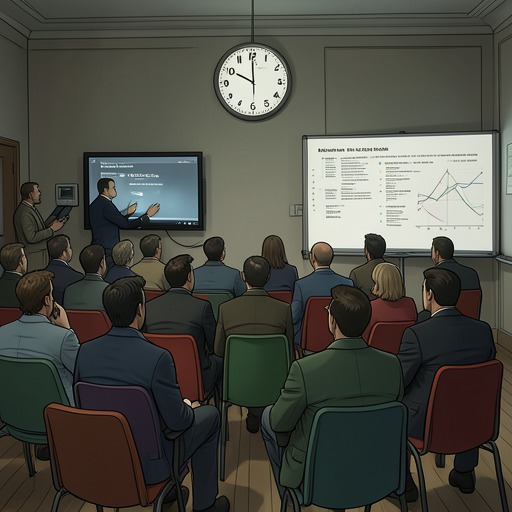
Presidential Commission investigation after the Challenger accident
The Wisdom of CrowdsThe Presidential Commission investigation after the Challenger accident established how faulty O-ring seals in Morton Thiokol’s booster rockets contributed to the shuttle’s destruction, validating the striking judgment investors had made before the cause was publicly known. In the book’s account, the investigation provides the eventual explanation against which the stock market’s immediate reaction can be measured—and makes that reaction harder, rather than easier, to explain.
Background and the Market’s Verdict
On January 28, 1986, the Challenger lifted off from Cape Canaveral and exploded 74 seconds later. Within minutes, investors began selling shares in the four major launch contractors: Rockwell International, Lockheed, Martin Marietta, and Morton Thiokol. Twenty-one minutes after the explosion, Lockheed was down 5 percent, Martin Marietta 3 percent, and Rockwell 6 percent. Morton Thiokol’s shares faced such a pronounced imbalance between sellers and buyers that trading was halted almost immediately. When trading resumed nearly an hour after the explosion, the stock was down 6 percent; by the close, it had fallen nearly 12 percent, while the other three companies’ losses had eased to around 3 percent.
That divergence amounted to a rapid market judgment that Morton Thiokol was responsible and would face serious financial consequences. Yet public information that day did not single out the company. The New York Times reported rumors that implicated none of the four contractors and said, “There are no clues to the cause of the accident.” The contrast between the market’s concentrated verdict and the public uncertainty made the later investigation a crucial test of what the price movement had meant.
The Commission’s Findings
Six months after the explosion, the Presidential Commission on the Challenger revealed that the O-ring seals on booster rockets made by Morton Thiokol had become less resilient in cold weather. The seals were intended to prevent hot exhaust gases from escaping; under the cold conditions, they could no longer maintain that function reliably, leaving gaps through which the gases leaked.
In the Challenger accident, escaping gases burned into the main fuel tank and caused the explosion. Morton Thiokol was held liable, while the other three contractors were exonerated. The Commission’s findings thus aligned the eventual account of responsibility with the steep disparity in the companies’ share-price declines on the day of the launch.
Demonstration and Unresolved Questions
The book also recalls physicist Richard Feynman’s demonstration at a congressional hearing: he put an O-ring in a glass of ice water, then showed that the drop in temperature had made it brittle. The simple demonstration made the seals’ vulnerability to cold concrete, but it came as part of the later public explanation, not as information available to investors when Morton Thiokol’s stock first fell.
The investigation confirmed the market’s apparent identification of the responsible company, but it did not explain how investors had reached that conclusion so quickly. Michael T. Maloney and J. Harold Mulherin examined insider-trading records and found no evidence that Morton Thiokol executives sold their shares that day, or that executives at rival companies used knowledge about the O-rings to sell Morton Thiokol short while buying competitors’ stock. Most of the investors who refused to buy the company’s shares were relatively uninformed. Maloney and Mulherin could not provide a convincing account of their behavior and ultimately assumed insider information had driven the price decline without explaining how it had reached the market.
Significance and Limits
The book presents the episode as an unusually clear instance of the market acting as a “weighing machine”: buyers and sellers tried to assess what had happened, and the eventual investigation showed that the market had singled out the liable contractor. The price movement preceded the Commission’s findings by six months and the public account of the O-ring failure, making the match between early judgment and later evidence especially striking.
At the same time, the episode is a single case, not proof that markets invariably know the truth. The book notes possible alternative explanations: the market’s choice might have been luck, Morton Thiokol’s business might have seemed particularly vulnerable to a downturn in the space program, or the trading halt itself might have warned investors away. It also emphasizes that this day lacked the media speculation, momentum trading, and Wall Street hype that can distort markets. The Commission established what caused the accident and who was held liable; it did not resolve the puzzle of how a crowd of mostly uninformed investors anticipated that finding.